
For most teams, fraud performance is still summed up in a single metric: chargeback rate. It is visible, painful, and tied directly to card network thresholds, so it naturally becomes the north star for fraud programs.
The new VP of Fraud Strategy at IPQS, Alexander Hall, recently sat down with Jordan Harris of The Fraud Boxer to unpack a growing issue many teams are underestimating: the true impact of fraud beyond chargebacks.
These hidden impacts rarely show up in chargeback metrics but significantly affect revenue, operations, and brand trust, making it critical for organizations to broaden how they measure fraud.
The problem is that chargebacks capture only a narrow slice of fraud losses, and focusing on them alone can hide bigger issues affecting growth, customer experience, and long term profitability.
These cases eat into margins just as much as disputes, but they are rarely tagged as fraud in internal reporting, so they do not inform future risk decisions.
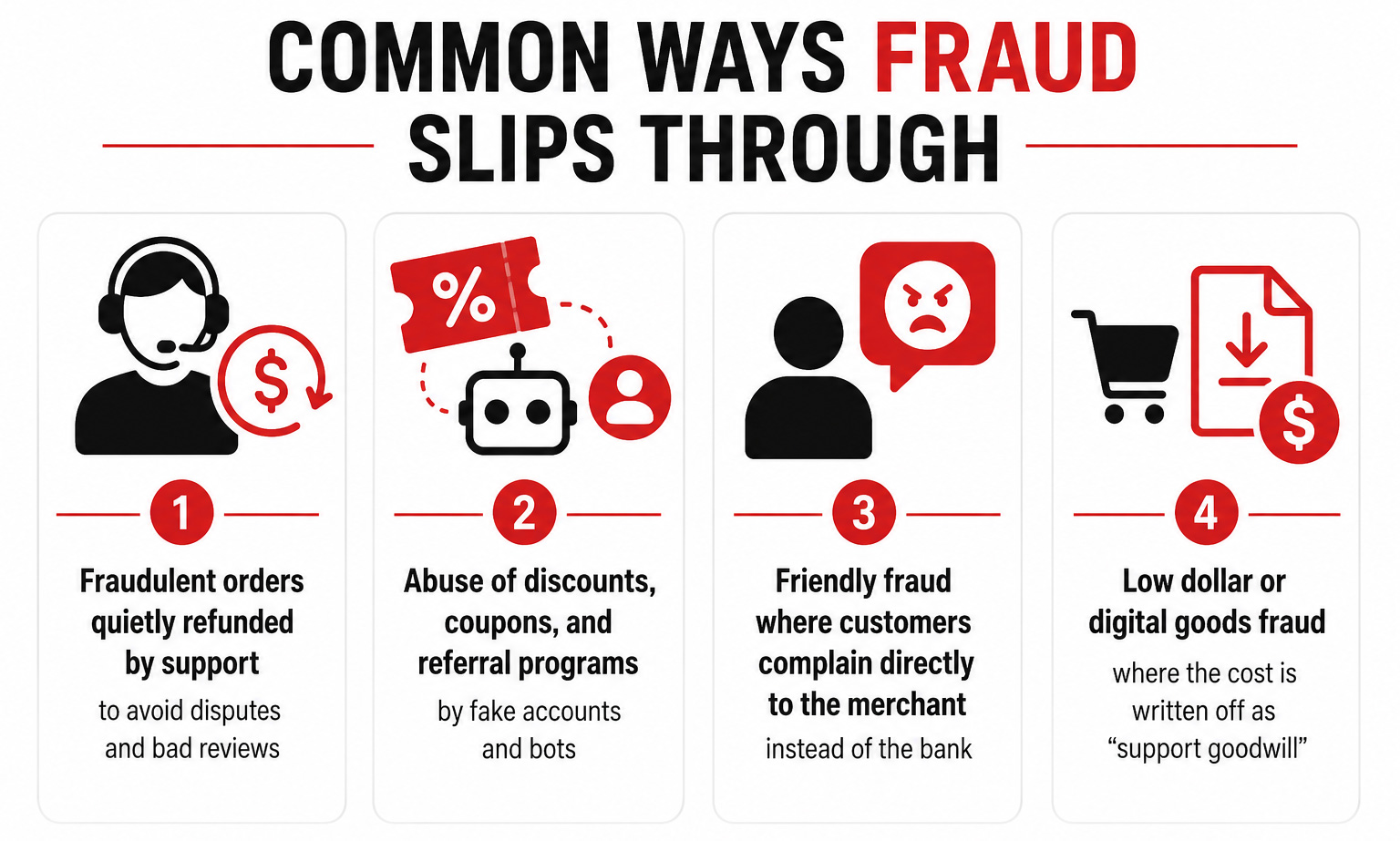
As an example, ecommerce and airlines are experiencing a troubling rise in account takeovers (ATOs).
While teams work hard to create seamless user experiences, successful ATOs quickly undo that effort, driving customer churn, increasing acquisition costs through negative word of mouth, and enabling off-platform identity theft through stolen PII. They also lead to direct losses like reimbursing stolen stored value, including loyalty points.
Similar patterns are emerging across industries, with iGaming platforms seeing fraudulent withdrawals after account changes, banking facing a surge in synthetic identity fraud, and money movement platforms dealing with identity theft used to create and operate fraudulent businesses.
Learn how to apply the right fraud checks at the right time without slowing users down.
Sign up for a free trial today to explore IPQS easy API solutions for your business.
Opportunity Cost: Good Customers You Never See
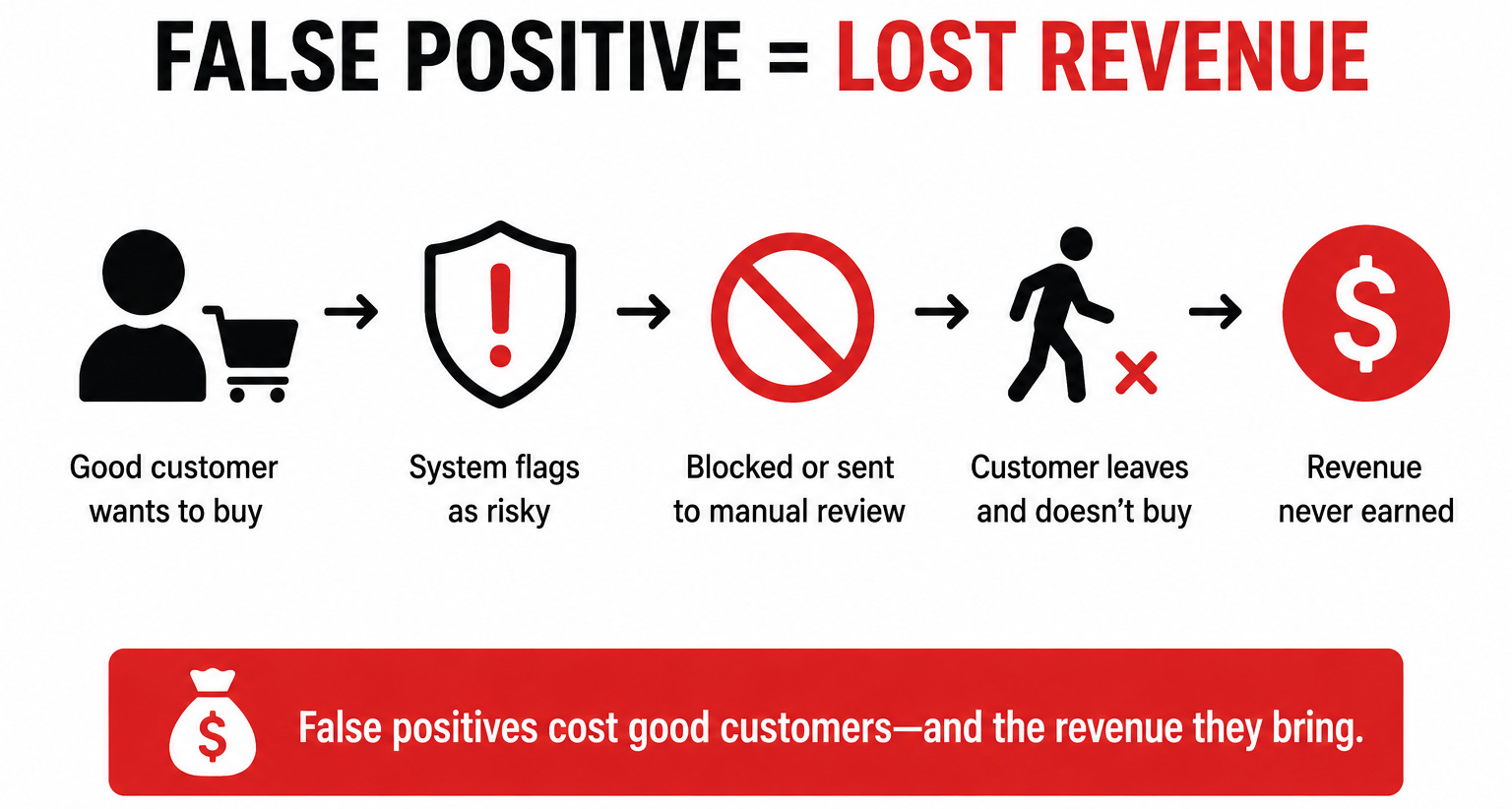
The other side of fraud is the revenue you never earn. When rules or tools are too strict, good customers are declined or forced into slow manual reviews.
False positives are one of the largest and least visible costs of fraud prevention. A legitimate customer who gets blocked because their IP, device, or email “looks risky” may abandon the purchase and never return.
From IPQS’ vantage point, this is where accurate risk scoring and tuning matter as much as catching fraud itself.
Operational Drag: Manual Reviews, Support Tickets, and Rework
Every suspicious order that goes to manual review adds labor cost, slows fulfillment, and creates friction for customers waiting on decisions.
Fraud related tickets also pile up in support queues, from refund requests and account lockouts to disputes over promotional abuse. Over time, the operational drag of managing fraud can rival direct loss, especially for high volume merchants and platforms.
Brand and Customer Experience Risk
Fraud is ultimately a trust problem. When accounts are taken over or fake accounts abuse a platform, legitimate users start to question whether their data and money are safe.
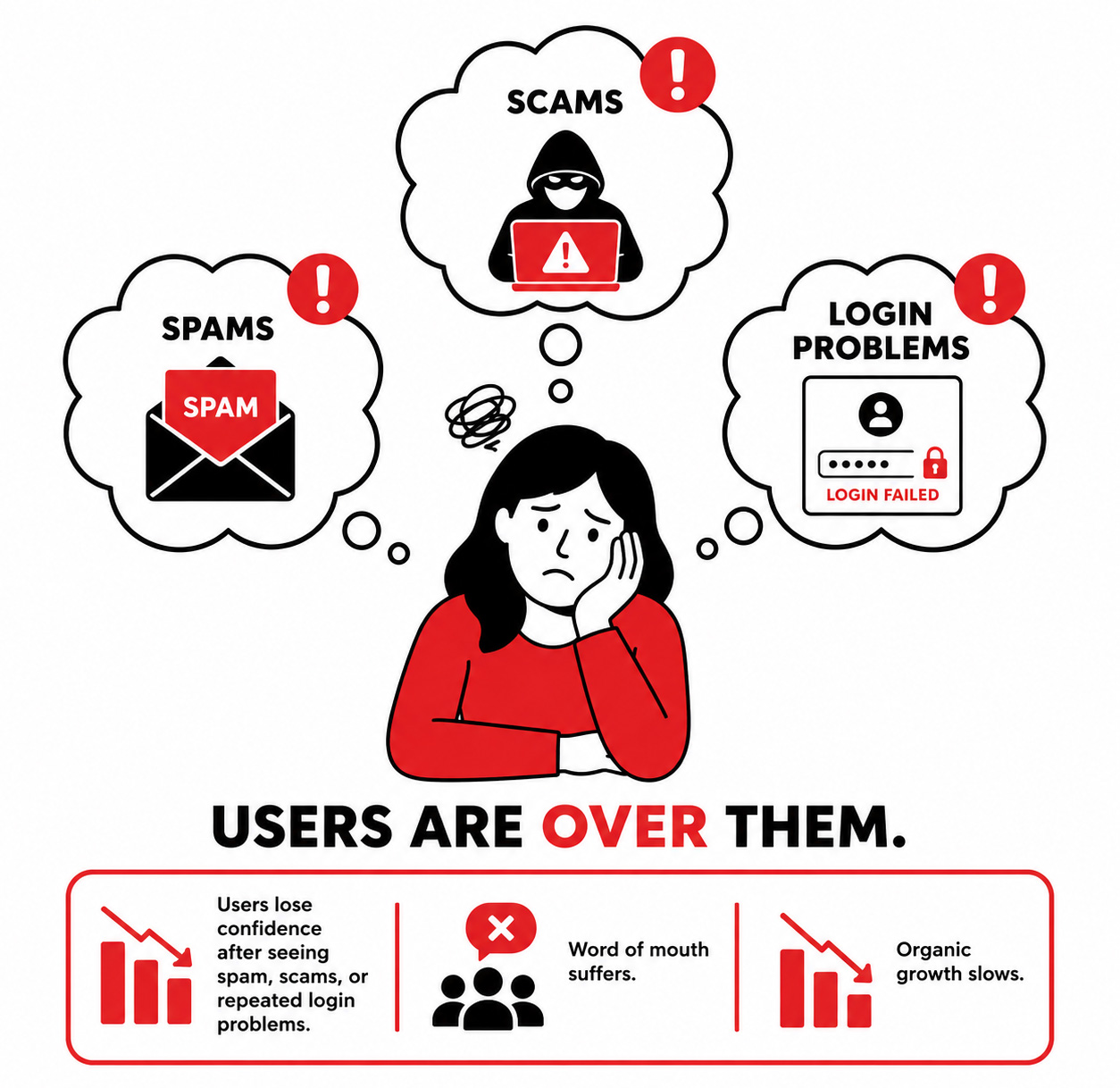
IPQS frequently works with companies where fraud has become a brand issue, not just a risk issue: users lose confidence after seeing spam, scams, or repeated login problems, and organic growth slows because word of mouth suffers.
Looking Beyond Chargebacks: Key Metrics to Track
From an IPQS perspective, a mature fraud program treats chargebacks as one outcome among many, not the whole picture. Useful additional metrics include:
-
Approval rate for good customers
-
False positive rate or “good customer decline” rate
-
Manual review rate and average decision time
-
Volume and value of fraud related refunds or credits
-
Abuse rates for promotions, referrals, and loyalty programs
-
Account takeover incidents and new account abuse volume
Tracking these metrics side by side with chargebacks gives a much clearer view of whether your fraud controls are truly supporting growth.
How IPQS Thinks About Measuring Fraud Impact
As a fraud and risk data provider, IPQS is designed to plug visibility gaps rather than just block obvious bad payments. Our scoring looks at the user and their behavior across signals like IP reputation, device intelligence, email history, and past abuse patterns, not just the payment details in front of you.
The goal is to help teams:
-
Catch more fraud before it becomes a chargeback
-
Reduce friction and false positives for legitimate customers
-
Identify patterns of abuse in accounts, promotions, and traffic sources
-
Feed more accurate data back into internal reporting and decisioning
When risk scores and signals align with your own outcomes data, your fraud metrics evolve from “chargebacks this month” to “total impact on revenue, costs, and growth.”
Questions to Ask Inside Your Organization
If you are looking to measure fraud impact beyond chargebacks, a few internal questions can help start the conversation:
-
Where are we writing off loss that is not labeled as fraud today
-
How many legitimate orders are delayed or declined by current controls
-
Which marketing or growth programs see the highest rate of abuse
-
How often do fraud cases create support tickets or manual work for other teams
-
Do we have a shared view of fraud impact across risk, product, finance, and marketing
Aligning on these questions helps teams move from reactive dispute handling to proactive fraud strategy.
Turning Broader Insight into Better Decisions
Once you recognize that chargebacks are only one symptom, you can redesign your fraud program around a wider set of outcomes.
From the IPQS perspective, the strongest programs are not just “stopping fraud” but actively protecting customer experience, enabling marketing to scale safely, and giving leadership confidence that risk controls support long term growth rather than restrict it.
Sign up for IPQS free trial today and see the difference when you prevent fraud before it starts.
Sponsored and written by IPQS.